
Table of Contents
- Introduction
- History & Evolution
- Audience & Demographics
- Key Features & Functions
- Business & Marketing Potential
- Best Practices & Tips
- Challenges & Limitations
- Future Outlook
- Conclusion
Introduction
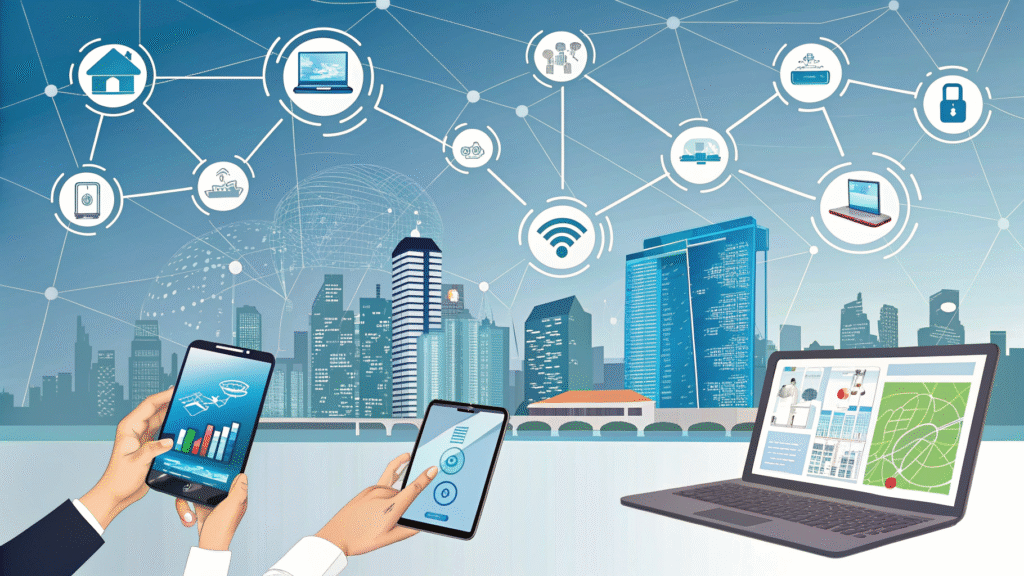
Picture this: You see an Instagram ad for running shoes, click through to browse, but don’t purchase. Later, you receive an email with those exact shoes plus a 10% discount. You add them to your cart on your phone but get distracted. That evening, you open the website on your laptop and your cart is waiting with items intact. Finally, you complete the purchase and receive SMS order updates. This seamless journey across devices and platforms? That’s omnichannel engagement in action.
Today’s customers don’t think in channels—they think in experiences. Consequently, they expect brands to recognize them whether they’re scrolling Instagram, reading emails, browsing websites, or using mobile apps. Moreover, they want consistent messaging, synchronized data, and the ability to start conversations on one platform and continue them on another without repeating themselves.
Unfortunately, many businesses still operate in silos. Their social media team doesn’t communicate with their email marketers. Additionally, website data doesn’t connect to their app. Furthermore, customer service can’t see purchase history from different channels. This fragmented approach frustrates customers and destroys sales opportunities.
Omnichannel engagement transforms disconnected touchpoints into a unified experience. Rather than managing separate channels independently, successful brands orchestrate them together, creating seamless customer journeys that feel personal, convenient, and effortless. As a result, they achieve higher conversion rates, increased customer loyalty, and significantly better return on marketing investment.
Ready to unify your customer experience and outperform competitors stuck in single-channel thinking? Let’s explore how omnichannel engagement can revolutionize your digital marketing results.
History & Evolution
The Single-Channel Era
Marketing once meant choosing one primary channel. Television advertisers created TV campaigns. Similarly, direct mail companies sent catalogs. Meanwhile, retail stores focused exclusively on in-person experiences. Each channel operated independently with minimal crossover.
Subsequently, early websites in the 1990s simply replicated physical brochures online. Businesses added digital presence without integrating it with existing operations. Meanwhile, email marketing emerged as a separate discipline with its own tools and strategies.
The Multichannel Approach
By the early 2000s, companies recognized they needed presence across multiple platforms. Consequently, multichannel marketing was born—businesses maintained websites, email lists, social media accounts, and physical locations simultaneously.
However, these channels rarely communicated. For example, a customer might receive conflicting promotions via email and social media. Additionally, shopping carts didn’t sync between desktop and mobile. Furthermore, in-store staff couldn’t access online purchase history. Each channel functioned as an isolated island.
The Cross-Channel Transition
Around 2010, marketers began connecting channels strategically. As a result, cross-channel marketing used data from one platform to inform another. For instance, abandoned cart emails triggered based on website behavior. Similarly, retargeting ads followed users from websites to social media.
This approach represented progress but remained limited. Indeed, integration often felt mechanical rather than seamless. Moreover, customers still experienced disconnection between touchpoints, and data sharing remained manual or delayed.
The Omnichannel Revolution
The term “omnichannel” gained prominence around 2013, reflecting a fundamental shift in philosophy. Rather than managing multiple separate channels, businesses created unified customer experiences where all touchpoints worked together harmoniously.
Meanwhile, smartphones accelerated this transformation. Customers began researching on mobile, comparing on desktop, and purchasing via apps—sometimes within minutes. Consequently, brands needed real-time data synchronization and consistent experiences across every interaction point.
Today’s Sophisticated Integration
Modern omnichannel engagement leverages advanced technology to create truly seamless experiences. For instance, customer data platforms (CDPs) unify information from every source. Additionally, marketing automation orchestrates personalized journeys across channels. Furthermore, artificial intelligence predicts customer needs and adjusts messaging dynamically.
Moreover, the focus has expanded beyond just marketing to encompass complete customer experiences—sales, service, support, and community engagement all operate from the same unified view of each customer.
Audience & Demographics
Who Needs Omnichannel Strategies?
E-commerce Retailers: Online stores coordinate shopping experiences across websites, mobile apps, social commerce, marketplaces, and customer service channels.
SaaS Companies: Similarly, software businesses engage users through product interfaces, email onboarding, in-app messaging, community forums, and support systems.
Content Creators: Additionally, influencers and educators maintain presence across YouTube, Instagram, TikTok, email newsletters, podcasts, and membership platforms while keeping audiences engaged consistently.
B2B Marketers: Meanwhile, business-to-business companies nurture prospects through LinkedIn, email sequences, webinars, case studies, sales calls, and account-based marketing campaigns.
Service Businesses: Furthermore, consultants, coaches, and agencies manage client relationships through discovery calls, proposal platforms, project management tools, messaging apps, and review sites.
Local Businesses: Even brick-and-mortar stores now coordinate online listings, social media, booking platforms, loyalty apps, and in-store experiences.
Consumer Expectations Driving Change
Research reveals that 73% of customers use multiple channels during their shopping journey. Additionally, 90% expect consistent interactions across all platforms. Consequently, brands delivering strong omnichannel experiences retain 89% of customers compared to just 33% retention for weak omnichannel approaches.
Market Demographics and Preferences
Younger generations particularly value seamless experiences:
Gen Z (born 1997-2012): Expects instant recognition across platforms and real-time responsiveness
Millennials (born 1981-1996): Similarly, values convenience and personalization across devices
Gen X (born 1965-1980): Appreciates channel flexibility with consistent quality
Baby Boomers (born 1946-1964): Increasingly adopts digital channels while valuing reliable service
Key Features & Functions
Unified Customer Data Foundation
The foundation of omnichannel engagement is centralized customer information. Therefore, successful implementations include:
- Single customer profiles combining data from all touchpoints
- Real-time synchronization across systems
- Complete interaction history regardless of channel
- Preferences, behaviors, and purchase patterns in one view
- Segmentation based on cross-channel behavior
Consistent Brand Experience Elements
Every touchpoint must reflect the same brand identity. Consequently, this requires:
Visual Consistency: Logos, colors, fonts, and design elements remain uniform across websites, apps, emails, and social media profiles.
Messaging Alignment: Similarly, brand voice, value propositions, and key messages stay consistent whether customers encounter you on Instagram, email, or your website.
Service Standards: Furthermore, response times, support quality, and problem resolution maintain the same excellence across phone, chat, email, and social channels.
Seamless Channel Transitions
Customers move effortlessly between platforms through:
- Shopping carts that sync across devices in real-time
- Conversations started on one channel continuing smoothly on another
- Customer service representatives seeing complete interaction history
- Saved preferences and settings carrying across all touchpoints
- Authentication and login working universally
Personalized Cross-Channel Journeys
Sophisticated systems orchestrate individualized experiences. For example:
- Behavioral triggers on one channel prompt relevant actions on others
- Content recommendations reflect activity across all platforms
- Retargeting follows logical progression rather than repetition
- Send-time optimization based on individual engagement patterns
- Dynamic content adapts to customer lifecycle stage
Integrated Communication Platforms
Modern businesses connect their technology stack, including:
- Customer relationship management (CRM) systems
- Email marketing platforms
- Social media management tools
- E-commerce platforms
- Live chat and messaging apps
- Customer service ticketing systems
- Analytics and reporting dashboards
- Marketing automation software
Attribution and Analytics Capabilities
Understanding cross-channel impact requires sophisticated tracking. Therefore, effective systems provide:
- Multi-touch attribution models showing contribution of each channel
- Customer journey mapping across all touchpoints
- Channel interaction analysis revealing optimal sequences
- Lifetime value calculations incorporating all revenue sources
- ROI measurement for coordinated campaigns
Business & Marketing Potential
Revenue Growth Through Higher Customer Lifetime Value
Customers engaged through multiple channels spend 30% more over their lifetime compared to single-channel customers. Furthermore, omnichannel customers shop 1.7 times more frequently, creating compounding revenue increases.
Customer Retention Advantages
Consistent experiences build trust and loyalty. Indeed, companies with strong omnichannel strategies achieve 91% greater year-over-year customer retention compared to those without coordinated approaches. Additionally, retained customers typically cost 5-7 times less to serve than acquiring new ones.
Conversion Rate Improvements
Seamless journeys remove friction that causes abandonment. As a result, brands report 287% higher purchase rates from omnichannel campaigns compared to single-channel efforts. Moreover, cart abandonment decreases by 25% when customers can seamlessly transition between devices.
Enhanced Customer Intelligence
Unified data reveals patterns impossible to detect in channel silos. Consequently, marketers discover which channel combinations drive highest value, which sequences convert best, and where customers need additional touchpoints. These insights inform product development, content strategy, and resource allocation.
Competitive Market Positioning
While many businesses claim omnichannel presence, few execute it well. Therefore, truly seamless experiences create memorable impressions that distinguish brands in crowded markets. Ultimately, customers increasingly choose brands offering convenience and consistency over those with marginally better prices.
Operational Efficiency Gains
Integrated systems eliminate duplicate efforts and wasted spending. Similarly, centralized management reduces time spent updating separate platforms. Furthermore, coordinated campaigns prevent message fatigue from competing communications hitting customers simultaneously.
Best Practices & Tips
Start with Customer Journey Mapping
Before implementing technology, understand actual customer paths. Therefore, you should:
- Interview customers about their decision-making process
- Analyze data showing common channel combinations
- Identify critical touchpoints in the buying journey
- Map current experiences highlighting pain points
- Design ideal future state prioritizing seamlessness
Invest in a Customer Data Platform
CDPs unify customer information from all sources into single profiles. Indeed, this foundation enables everything else. Consequently, choose platforms offering:
- Real-time data synchronization
- Identity resolution across devices and channels
- Integration with your existing technology stack
- Flexible segmentation capabilities
- Privacy compliance features
Establish Consistent Brand Guidelines
Create comprehensive standards ensuring uniformity. Specifically, develop:
- Visual identity guidelines covering all digital applications
- Voice and tone documentation with channel-specific examples
- Response time commitments for each communication channel
- Message hierarchy defining priority information
- Content templates maintaining brand consistency
Implement Progressive Profiling
Rather than overwhelming customers with long forms, gather information gradually. For instance:
- Collect basic details at first interaction
- Add data points across subsequent touchpoints
- Use behavioral data to supplement declared information
- Never ask twice for information already provided
- Show customers value received from sharing data
Coordinate Campaign Timing and Frequency
Prevent message overload through centralized orchestration. Therefore:
- Set global frequency caps across all channels
- Space communications appropriately
- Suppress emails after in-app message engagement
- Coordinate promotional timing to avoid confusion
- Test channel combinations and sequences
Enable Cross-Channel Cart Recovery
Abandoned carts represent huge revenue opportunities. Consequently, implement:
- Sync carts in real-time across web and mobile
- Send reminder emails with direct cart links
- Display retargeting ads showing abandoned items
- Offer limited-time incentives via SMS
- Allow one-click checkout from any channel
Personalize Based on Channel Preferences
Respect how customers want to engage. Specifically:
- Track which channels each customer responds to best
- Prioritize preferred channels for important communications
- Allow customers to set communication preferences
- Adjust content format to suit channel strengths
- Test engagement across different channel combinations
Train Teams on Unified Customer Views
Technology alone doesn’t create seamless experiences—people do. Therefore:
- Ensure all customer-facing staff access complete interaction history
- Train on using unified data to personalize conversations
- Establish protocols for transitioning customers between channels
- Foster collaboration between traditionally siloed teams
- Reward behaviors that enhance omnichannel experiences
Measure What Matters Most
Focus on metrics reflecting customer experience quality. For example:
- Customer satisfaction scores across all touchpoints
- Channel preference trends over time
- Cross-channel conversion rates
- Customer lifetime value by channel combination
- Time-to-resolution regardless of where conversation started
Test and Optimize Continuously
Omnichannel excellence requires ongoing refinement. Therefore:
- A/B test channel sequences and timing
- Experiment with message consistency versus variety
- Optimize handoff points between channels
- Solicit customer feedback about experience smoothness
- Monitor industry innovations and emerging channels
Challenges & Limitations
Technology Integration Complexity
Connecting disparate systems presents significant obstacles. For instance, legacy platforms often lack modern APIs. Additionally, custom integrations require development resources and ongoing maintenance. Furthermore, updates to one system can break connections with others, creating fragile technical ecosystems.
Data Silos and Quality Issues
Unifying customer data sounds simple but proves challenging. Specifically:
- Different systems use inconsistent customer identifiers
- Duplicate records create fragmented profiles
- Data quality varies across sources
- Privacy regulations restrict certain data sharing
- Real-time synchronization requires significant infrastructure
Organizational Resistance
Omnichannel strategies threaten traditional structures. For example, marketing teams built around channel expertise resist integration. Similarly, compensation tied to channel-specific metrics discourages collaboration. Furthermore, budget allocation becomes contentious when ownership isn’t clear.
Resource Requirements
Creating truly seamless experiences demands investment. Consequently:
- Expensive technology platforms and integrations
- Specialized talent understanding cross-channel orchestration
- Ongoing maintenance and optimization efforts
- Content creation multiplied across channels
- Training for teams accustomed to channel silos
Privacy and Consent Complications
Tracking customers across channels raises privacy concerns. Indeed, regulations like GDPR and CCPA restrict data collection and usage. Moreover, cookie deprecation and platform privacy changes make cross-channel identification increasingly difficult. Therefore, balancing personalization with privacy requires careful navigation.
Attribution Ambiguity
Determining which channels deserve credit for conversions becomes complex with multiple touchpoints. Additionally, different attribution models produce conflicting results. Furthermore, some channels contribute indirectly—building awareness or trust—making their value difficult to quantify precisely.
Maintaining Consistency at Scale
As businesses grow, maintaining uniformity becomes harder. For instance, different teams interpret brand guidelines variably. Similarly, regional variations create inconsistencies. Additionally, rapid content production introduces quality control challenges. Furthermore, emerging channels require extending standards to unfamiliar platforms.
Future Outlook
AI-Powered Orchestration
Artificial intelligence will automatically coordinate channel engagement based on individual customer behavior patterns. Consequently, rather than manually designing journey flows, marketers will set objectives while AI determines optimal channel combinations, timing, and messaging for each person.
Voice and Conversational Commerce Integration
Smart speakers, voice assistants, and AI chatbots will become standard touchpoints in omnichannel ecosystems. As a result, customers will initiate purchases via voice commands, receive updates through conversational interfaces, and resolve issues through natural language interactions—all synchronized with traditional channels.
Augmented Reality Experiences
AR will bridge digital and physical experiences more seamlessly. For example, customers will visualize products in their homes through smartphone cameras, try virtual clothing on their avatars, and receive AR navigation in physical stores—with all experiences connected to their unified customer profiles.
Blockchain-Based Customer Data
Distributed ledger technology may enable customers to own and control their data while granting brands temporary access. Consequently, this shift would resolve privacy concerns while maintaining personalization capabilities, creating more transparent and trusted omnichannel relationships.
Predictive Channel Optimization
Advanced analytics will forecast which channels customers will use next and proactively optimize those experiences. Therefore, systems will predict when customers will switch from mobile to desktop, when they’ll seek customer service, and which channels will influence purchase decisions.
Emotion-Aware Engagement
Sentiment analysis and emotional intelligence will inform channel selection and messaging. For instance, if a customer appears frustrated based on chatbot interactions, the system might proactively escalate to phone support with an empathetic representative—creating truly responsive omnichannel experiences.
Conclusion
Omnichannel engagement isn’t just a marketing buzzword—it’s the new standard customers demand and successful businesses deliver. Indeed, in a world where people seamlessly move between devices, platforms, and channels throughout their day, brands must match that fluidity with equally seamless experiences.
The businesses thriving today aren’t those with the most channels but those orchestrating channels most effectively. Furthermore, they recognize that customers don’t care about your organizational structure, technology limitations, or channel metrics. Instead, they simply want smooth, consistent, personalized experiences that respect their time and preferences.
Starting your omnichannel journey doesn’t require perfection from day one. Rather, begin by connecting your two most important channels—perhaps email and your website. Ensure shopping carts sync and messaging aligns. Subsequently, build from there, adding channels gradually while maintaining quality and consistency.
Remember that technology enables omnichannel experiences, but customer-centricity defines them. Therefore, every integration decision should answer: “Does this make things easier and better for customers?” If not, reconsider your approach.
Ultimately, the competitive advantage goes to businesses that remove friction, eliminate repetition, and create experiences so seamless that customers barely notice the underlying complexity. That’s when omnichannel engagement becomes invisible magic rather than visible effort.
Ready to transform your fragmented channels into a unified experience? Start today by mapping one customer journey from awareness to purchase. Then, identify every touchpoint and note where disconnection occurs. Next, fix your biggest gap. This simple exercise will reveal opportunities you’ve been missing and launch your omnichannel transformation.
Your customers already think omnichannel—consequently, they expect you to operate that way too. Don’t let competitors capture market share simply by offering the seamless experiences you’re capable of delivering. Indeed, the future belongs to brands that engage customers everywhere, consistently, with experiences that feel effortless. Make your business one of them.
Outbound Links: