

Introduction
The digital world is engaged in a silent, high-stakes war. On one hand, cybercriminals are constantly devising new ways to breach defenses. On the other hand, security professionals work tirelessly to protect our data and systems. Meanwhile, AI & cybersecurity has emerged as a powerful new player, dramatically reshaping this conflict. In fact, the relationship between AI & cybersecurity represents a classic double-edged sword, equipping both attackers and defenders with unprecedented capabilities. Therefore, understanding this dynamic is crucial for any business leader, marketer, or creator navigating the modern digital landscape. Ultimately, this article will explore how AI & cybersecurity is revolutionizing the world of digital security from both sides of the firewall.
History & Evolution of AI in Cybersecurity
The integration of AI into security didn’t happen overnight. It evolved alongside computing power and data availability.
- Early Days: Rule-Based Systems (1980s-1990s): Early “AI” in cybersecurity was primarily based on static rules. Antivirus software used signature-based detection, which could only identify known threats. It was effective for its time but struggled with new, unknown malware.
- The Rise of Machine Learning (2000s-2010s): As data volumes exploded, machine learning (ML) algorithms became capable of analyzing patterns to detect anomalies. This allowed systems to identify suspicious behavior, like unusual login times or data transfers, marking a shift from knowing what to attack to understanding how an attack behaves.
- The Deep Learning Revolution (2010s-Present): The advent of deep learning and neural networks supercharged this process. Today’s AI can process vast amounts of data in real-time, predict attack vectors, and even automate responses, creating a more proactive and adaptive security posture.
Audience & Demographics: Who Is Affected?
The implications of AI and Cybersecurity touch a wide range of professionals:
- C-Suite Executives & Entrepreneurs: Need to understand the strategic risk and investment required to protect their companies from AI-powered threats.
- Marketers & Content Creators: Handle customer data and digital assets; they must be aware of threats like AI-generated phishing campaigns that could compromise brand integrity.
- IT and Security Teams: Are on the front lines, using AI-powered tools to defend their organizations and needing to stay ahead of attacker methodologies.
- Software Developers: Must practice “secure by design” principles, understanding how AI can both exploit vulnerabilities and help build more resilient code.
Key Features & Functions: The Double-Edged Sword
AI’s role is defined by its application. Here’s how it functions for both attack and defense.
AI for Defense: The Digital Shield
- Threat Detection and Anomaly Identification: Furthermore, AI systems analyze network traffic, user behavior, and endpoint activities to spot deviations from the norm. As a result, potential breaches can be identified much faster than humans could detect them.
- Automated Incident Response: Moreover, when AI detects a threat, it can automatically isolate infected devices, block malicious IP addresses, and initiate containment protocols. As a result, response times are dramatically reduced.
- Predictive Analytics: Additionally, by analyzing global threat intelligence, AI can forecast potential attacks on a specific organization. This proactive approach allows defenders to patch vulnerabilities before they are exploited.
- Vulnerability Management: AI can scan code and systems to identify potential security weaknesses, helping developers prioritize patching efforts.
AI for Attack: The Smart Weapon
- Hyper-Realistic Phishing: AI can generate highly personalized phishing emails and deepfake audio/video, making social engineering attacks incredibly difficult to detect.
- Automated Hacking: AI-powered tools can automatically probe networks for weaknesses, adapt their attack methods in real-time, and exploit vulnerabilities at a scale and speed impossible for humans.
- Evading Security Systems: Malware can use AI to learn the behavior of antivirus software and modify its own code to avoid detection, creating polymorphic threats.
- Data Poisoning: Attackers can corrupt the datasets used to train AI security models, causing them to misclassify threats and fail.
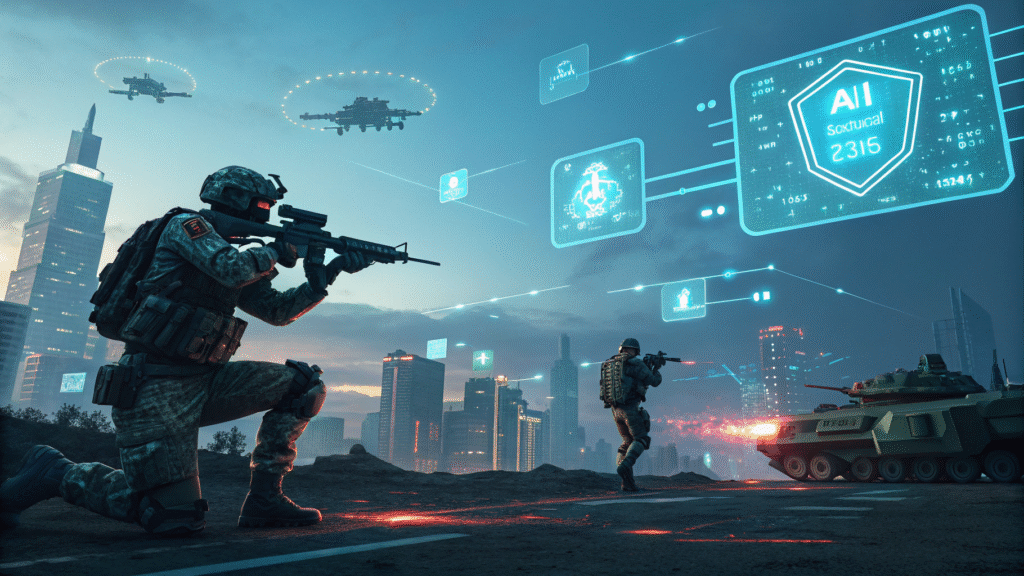
Alt text: A conceptual diagram illustrating the dual role of AI and Cybersecurity as both a defense shield and an attack weapon.
Business & Marketing Potential
For businesses, leveraging AI in cybersecurity isn’t just a defensive measure—it’s a competitive advantage.
- Building Trust as a Brand Value: Companies that proactively invest in advanced AI-driven security can market themselves as safe and trustworthy custodians of customer data.
- Cost Efficiency: While AI requires an initial investment, it automates routine tasks and frees human experts to focus on complex strategic threats, ultimately improving operational efficiency.
- Enabling Innovation: Strong security allows businesses to confidently adopt new technologies (like IoT and cloud services) and business models, driving growth without unacceptable risk.
Best Practices & Tips
Navigating the new landscape of AI and Cybersecurity requires a strategic approach.
- Adopt a Defense-in-Depth Strategy: Don’t rely on a single AI solution. Layer AI-powered tools with traditional security measures.
- Invest in Human Expertise: AI is a tool, not a replacement for skilled security professionals. Invest in training your team to manage and interpret AI systems.
- Prioritize Data Quality: Importantly, the effectiveness of defensive AI depends on the quality of the data used for training. Ensure your team maintains data that is clean, relevant, and comprehensive.
- Practice Basic Cyber Hygiene: Even with advanced AI, fundamental practices like multi-factor authentication (MFA), least-privilege access, and regular software updates remain critically important.
Challenges & Limitations
Nevertheless, despite its power, AI in cybersecurity faces significant hurdles.
- High Cost and Complexity: Implementing and maintaining advanced AI systems can be expensive and require specialized skills.
- False Positives: AI models can sometimes generate alerts for benign activity, leading to “alert fatigue” among security teams.
- Adversarial AI: As mentioned, attackers can use AI to fool defensive systems, creating an ongoing arms race.
- Explainability (The “Black Box” Problem): It can be difficult to understand why a complex AI model made a specific decision, which is a problem for compliance and troubleshooting.
Future Outlook
The fusion of AI and Cybersecurity will only deepen, leading to several key trends:
- Generative AI for Security: Security tools will use generative AI to automatically write patches, create realistic training simulations, and draft incident reports.
- The Rise of AI-on-AI Combat: We will see more direct engagements where defensive AI systems actively counteract AI-powered attacks in real-time.
- Explainable AI (XAI): To combat the “black box” problem, new techniques will emerge to make AI decision-making transparent and auditable.
- Quantum Computing’s Impact: The future arrival of quantum computing will break current encryption standards, leading to a new frontier where AI will be essential for developing and managing quantum-resistant cryptography.
Conclusion
The relationship between AI and Cybersecurity defines a new chapter in digital conflict. It is a powerful accelerant, making both attacks and defenses smarter, faster, and more efficient. Consequently, for businesses and individuals, the key to success lies not in resisting this change but in embracing it strategically.. By understanding the dual nature of AI, investing in the right tools and talent, and maintaining a proactive security posture, we can harness this transformative technology to build a more resilient digital future. The AI battlefield is here, and the time to choose your side and arm yourself with knowledge is now.